
Will Venice always be popular?
What the travel industry can learn from black swans and Karl Popper.

Earlier this year I was having a conversation with the CEO of a major tour operator. I asked him how overtourism might impact demand for his biggest selling destination: Venice.
“I’m not worried. Venice is Venice. Tourists have always wanted to go. Tourists will always want to go.”
He’s not wrong. Tourists do love Venice. It is a city of unique beauty and cultural significance. Last year alone it attracted as many as 28 million visitors. It is consistently ranked among the most visited cities in the world, despite having a local resident population of just 50,000 people.
So why does his response make me uneasy? Well as logical as the CEO’s reasoning appears, it reminded me of a historical lesson from the 17th century involving swans.
The ‘Black Swan Theory’
Up until the late 17th century, European zoologists had only ever seen white swans. Naturally (pun fully intended) they concluded that all swans must therefore be white. Then, in 1697, Dutch explorer Willem De Vlamingh, navigating the coast of what is now West Australia, encountered black swans on a previously unchartered river (a river now appropriately called Swan River, in Perth, Australia).


The discovery didn’t just upend a zoological assumption about swans; it highlighted a flaw in the reasoning that all swans must be white.
In the words of the Scottish Enlightenment philosopher David Hume, “That the sun will not rise tomorrow is no less intelligible a proposition, and implies no more contradiction, than the affirmation that it will rise.” Hume’s point was that our expectation that the sun will rise each day is based on habit and past experience, not on logical certainty. In other words, just because something has happened in the past, it doesn’t logically follow that it will happen in the future.
“Every day the farmer feeds the turkey. The turkey grows more confident that humans are kind. Then, on the day before Thanksgiving, the turkey has its throat cut.”
Bertrand Russell.
Uncharted waters
Fast forward a few hundred years to conversation I was having with the CEO: there was a reason I was asking about the impact of overtourism on demand for Venice.
In the last 75 years, the global tourist population has risen from 1 million in 1950 to over 670 million today. The pace of growth, urbanization and development has, in many destinations, resulted in a growing concern about the impact of tourism. Locals in Barcelona, Venice and Dubrovnik are finding it harder to access services, unable to afford rent, or are discovering that their favorite, family-run café has been transformed into a Starbucks. With the total population of tourists expected to double in the next 25 years, this phenomenon is set to get worse.
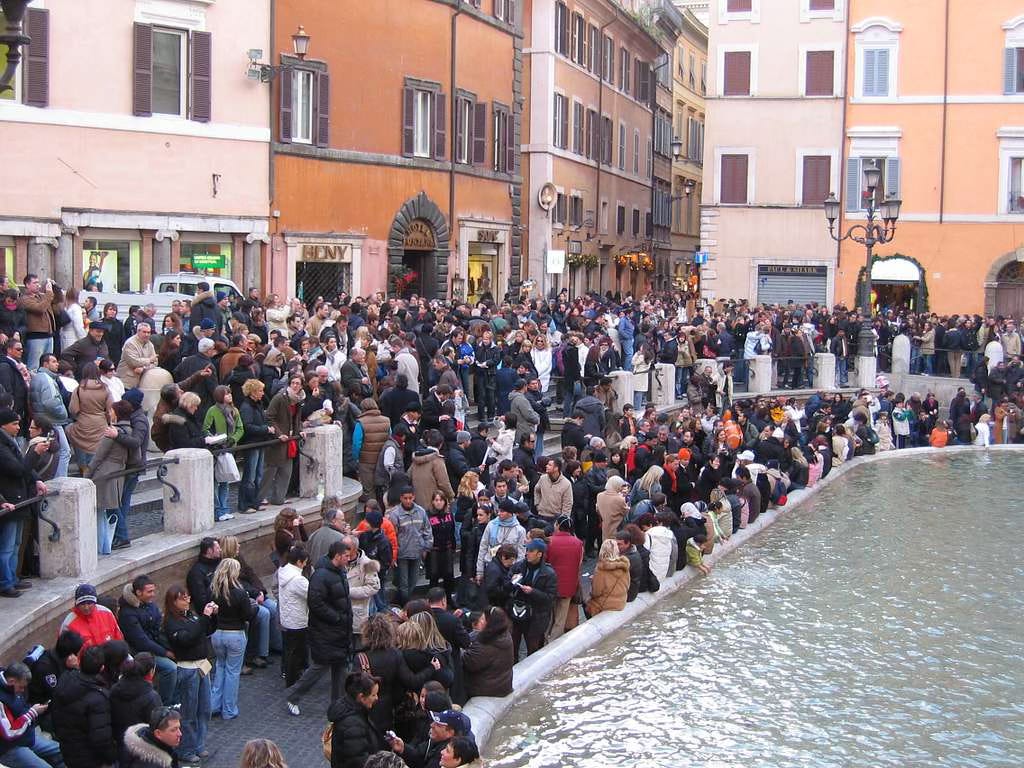
Overtourism is far from the only major phenomenon impacting travel.
Artificial intelligence is already transforming how travelers design and plan trips. Google Magic Eraser now lets users remove unwanted crowds from its photos. Hopper are using GPT-powered trip planners to provide alternatives to last-minute changes or cancellations. These advancements, as exciting as they might be, pose some fairly existential questions for the future of travel: what happens when millions of AI-generated itineraries all funnel tourists to the same ‘hidden gems’? Or how adaptive-pricing will fuel overtourism?
Then there is climate change. Extreme climate events are becoming more frequent. Last year alone, flash floods brought Dubai to a standstill; the LA wildfires killed 29 people and burned through 37,000 acres of land; an extreme heatwave in Spain triggered public warnings over the long term impacts of extreme heat, and; Greece was forced to evacuate 2,000 people as wildfires broke out across the island of Rhodes. These events are now affecting traveler behavior. According to a report in The Guardian, many tourists are now abandoning beach holidays in favor of cooler climates.
The convergence of climate shocks, the rise of artificial intelligence and a rapidly expanding tourist population mean that previous observations about tourism dynamics may no longer hold true. In other words, much like the explorers of the 17th century, the travel industry is entering uncharted waters.
And that is why I asked the question. I wanted to understand the extent to which he thought the convergence of these phenomena might impact his business. To which he said ‘no’.
Lessons on resilience from Karl Popper
I’m increasingly of the mind that one of the most overlooked risks facing the travel industry today isn’t climate change, recession or overtourism. It’s certainty - the unexamined assumption that tomorrow will always look roughly like today.
Too many leaders in tourism rely on assumptions that feel safe because - until now - they’ve held true. In the mind of that CEO, Venice has always been popular, so it always will be. Tourists want what they’ve always wanted.
Sure, this type of thinking is comforting, but it’s hardly strategic. It’s how we came to believe that nuclear power was safe, that house prices could only go up, or that corporations were too big to fail.
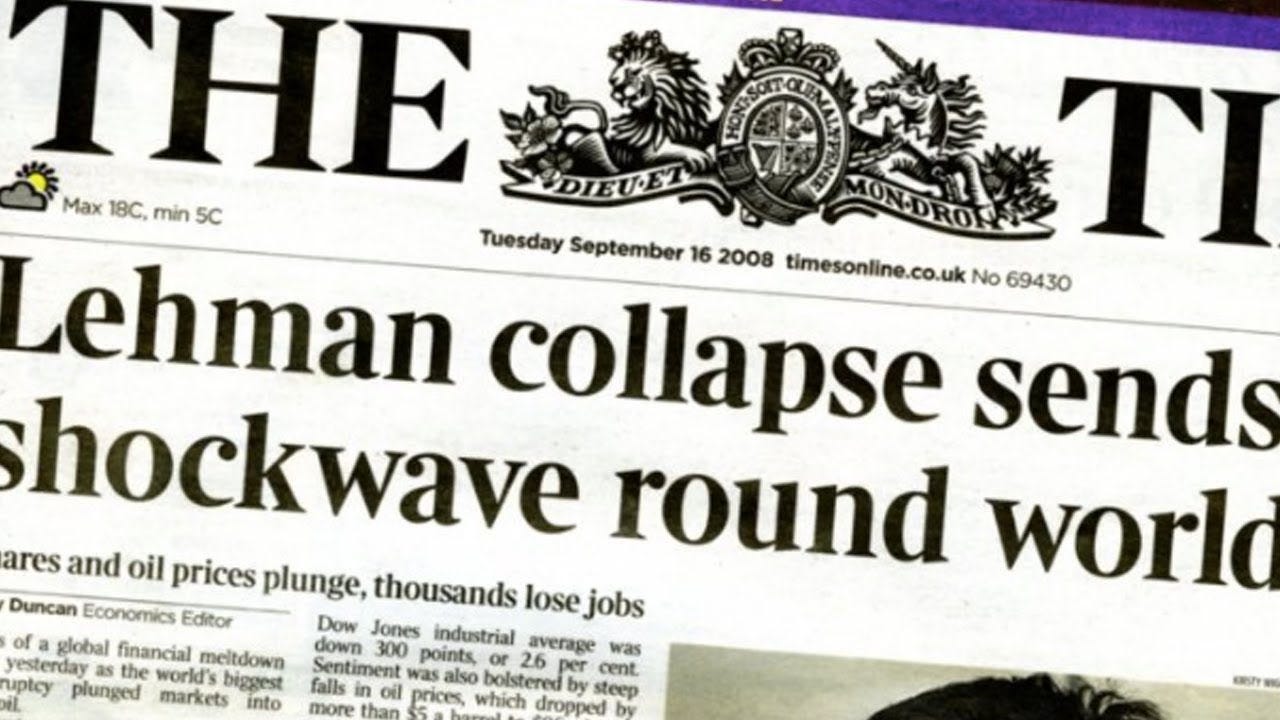
Creating future-proof strategies in an age where climate instability, shifting geopolitical alliances, generational value shifts, and AI are already reshaping traveler behavior requires us to question long-held truths about the travel industry. They deserve more serious consideration than inductive reasoning allows.
This is why I keep coming back to Karl Popper. His idea of critical rationalism holds that progress depends not on proving ourselves right, but on exposing where we might be wrong. The strength of a theory lies not in how easily it can be confirmed, but in how rigorously it can be tested. In the case of Venice, that means asking “what would need to happen for Venice to suddenly become unpopular?”.
I suspect few companies seriously consider questions like this. Perhaps because they sound silly. Asking a room full of travel executives ‘what would need to happen for Venice to suddenly become unpopular?’ would likely result in you being quietly asked to leave the room and never invited back.
History, however, has shown that it’s exactly these type of questions we regret not asking. They’re how we identify blindspots. Or know what early-warning systems are needed so that we can future-proof a strategy.
A few months ago, I couldn’t explain why the CEO’s dismissive response about Venice bothered me. Now I can. It wasn’t what he said. Or the idea that Venice would continue to be popular. It was that he hadn’t even considered the idea that it might not be. It was the realization that he could acknowledge that travel was fundamentally changing, while holding onto the idea that his observations of events in the past would continue to be true in the future.
His strategy wasn’t grounded in exposing weaknesses or testing the strength of assumption, but built on faith. And faith, however comforting, is not a strategy.
.
I was just in Venice last week, and early-May crowds made it miserable to get from point A to point B - I can't even imagine the crowds of peak summer season. And while I also don't see these crowds dying down, it makes me wonder how much more capacity the city can physically handle. Seeing the numbers and charts of exponential tourist growth over the past 2-3 years makes me think that the city will eventually hit a number of tourists that it can't handle (it's possible we're already at that point during peak season). I believe it's up to the city to regulate tourism (more than just a small entry fee to the city), but I fear tourism is also growing faster than these regulations can be implemented