
Can the Louvre build its way out of overtourism?
What the world's most famous art gallery are doing about crowds.

In Part II of this two-part series on ‘ ‘How the Mona Lisa Became the Most Disappointing Attraction in the World?’, we’re going to look at how the Louvre are addressing overtourism, and whether the recent announcement of a €800m renovation will work.
What We’ll Cover:
That major structural renovation and exhibit curation should resolve a lot of the bottlenecks and problems impacting the Louvre today
That the practical application of data and forecasting are critical to the success of this renovation.
Acknowledging and addressing overtourism can create opportunities for diversifying growth and revenue streams.
Staff walkouts, protests over working conditions, plummeting reviews and a director who described the museum as being in disrepair - it’s been a difficult few years for the Louvre. So on January 28, 2025, Emmanuel Macron, the President of France, announced that the gallery was set to undergo a major renovation.
The big news is that the Mona Lisa is going to be moved to her own, dedicated exhibit. They’re also adding a new entrance on the Seine-side of the museum to make it easier to get into the gallery and they’re revamping the dated facilities.
The question is, will any of this resolve the gallery’s overcrowding problem? Let’s find out.
One for the Bucket Listers
Problem: The Mona Lisa tops many travelers’ bucket-lists. So much so, that people who have little interest in a Veronese or a Botticelli, will queue for hours to see Da Vinci’s masterpiece. It’s become something of a rite of passage. The problem is that the portrait shares its space with other paintings. So those that do want to look at a Veronese, have to manage the throngs of people who don’t.
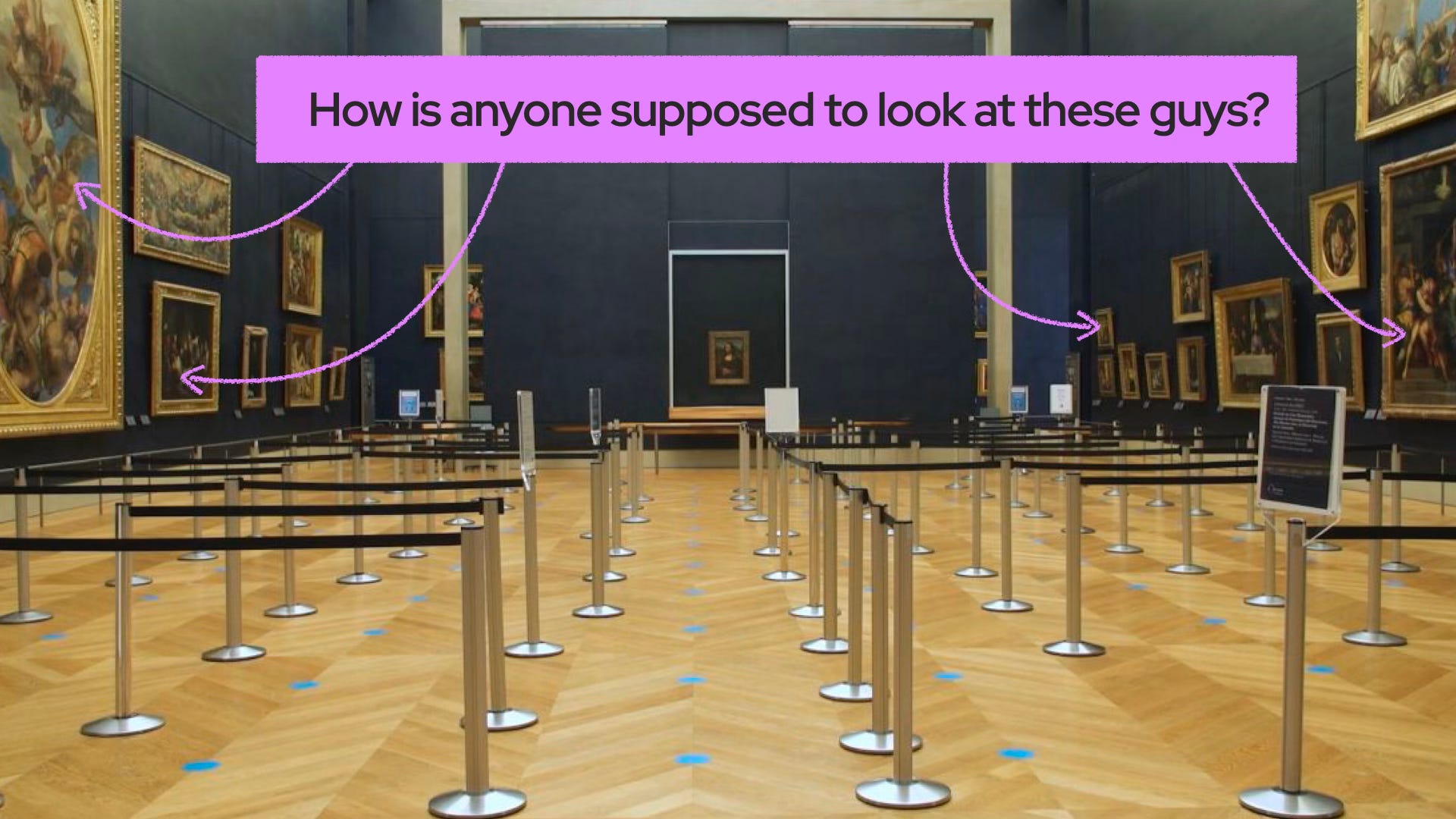
Solution: By moving the portrait to its own dedicated exhibit, the Louvre will be separating the ‘bucket-listers’ (visitors only interested in saying they’ve seen the Mona Lisa) from those that are interested in everything else.
Will it Work? Yes, to a degree. While it is true that 4 in 5 people visit the Louvre to see the Mona Lisa, that won’t translate into the gallery becoming 80% quieter overnight. What it will achieve though, is some separation between those wanting to look at the Mona Lisa, and those interested in everything else.
Improved Crowd Management
Problem: Right now, ticket entry to the Louvre offers access to the entire gallery. Once in the gallery, visitors can go where they please, when they please. The problem is that this makes it hard to predict and manage crowds, which is why the ‘allocated time’ currently offered by the gallery for museum entry is almost impossible to implement.
Solution: With a dedicated exhibit room and ticketing system just for the Mona Lisa, the gallery will be able to set and allocate time slots for each visitor. They’ll know how long it should take to move through the exhibit, see the painting, and leave. With greater predictability in an environment that’s easier to control, limiting the length of queues into the exhibit will be a lot easier.
Will it work? While crowd management should improve, don’t expect to get hours to look at the Mona Lisa. The maths that we explored in Part I still applies: there are only so many hours in a day in which you can see a painting the size of a large microwave.
The Experience the Mona Lisa Deserves
Problem: The Mona Lisa Experience at the Louvre generally consists of queueing for two hours, then getting just two minutes to look at a painting that’s 6 meters away and protected by glass (given Extinction Rebellion’s preferred use of soup, that’s not a bad thing). Bottom line: it’s all together unpleasant.
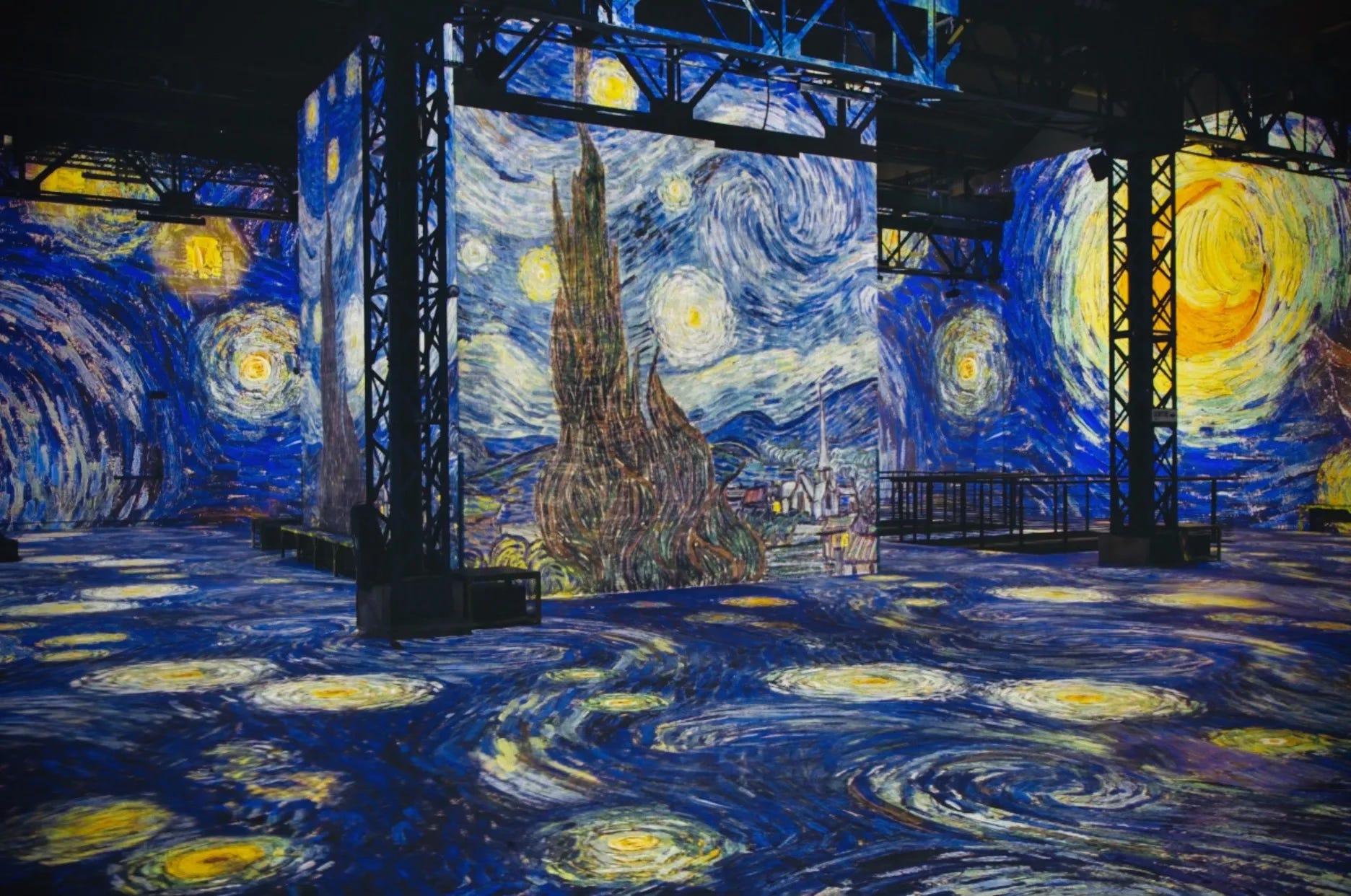
Solution: We can be sure of one thing - the experience will be massively improved with this new exhibit. Personally, I’d love to see augmented reality to explore Da Vinci’s mastery in technique and the type of immersive experiences that’s made the Ateliers des Lumieres so popular.
Will it work? Almost anything would be better than the current experience. If the Louvre can rediscover the spirit of IM Pei - blending tradition with modernity, then I think the Mona Lisa could get a visitor experience worthy of Da Vinci.
A New Side Entrance
Problem: The iconic glass pyramid at the center of the Louvre, despite being an esthetic masterpiece, has become something of a problem for the Louvre. In the summer months, queues outside the gallery can last over an hour.
Solution: The proposal imagines a new entrance on the Perrault Colonnade facade, to improve the efficiency of entry and exit. The plan is to build on the original grandeur of Claude Perrault’s original design, while integrating modern solutions to visitor flow.
Will it work? The glass pyramid at the Louvre is a masterpiece of modern architectural design, so it’s going to be difficult to divert people to a new entry on looks like alone. So if the Louvre are going to be take the pressure off current main entrance, it would make sense for the design to have dedicated access points, whether that’s for tour groups, or for entry to the new Mona Lisa exhibit.
Interior Motives
The renovation isn’t limited to improving the visitor experience. There’s an economic incentive at play too.
In 2023, the Louvre set a visitor cap of 30,000 people a day, which (at full capacity) amounts to 9.3 million visitors a year. That same year, the number of visitors to the gallery reached 8.9 million, and by 2024, they surpassed 9.1m. This means that the Louvre is already operating at - or close to - maximum capacity.
Why is this a problem? Because of ‘opportunity cost’. According to a report by Deloitte and Google, tourists arrivals are set to hit 2.4 billion by 2040, an increase of almost 1 billion from today. If the Louvre keep the caps in place, the gallery would essentially miss out on all future growth in travel and tourism for the next 15 years, losing billions of dollars in potential earned ticket sales.
However, if the gallery can improve crowd management, then it can remove the caps, as illustrated below:
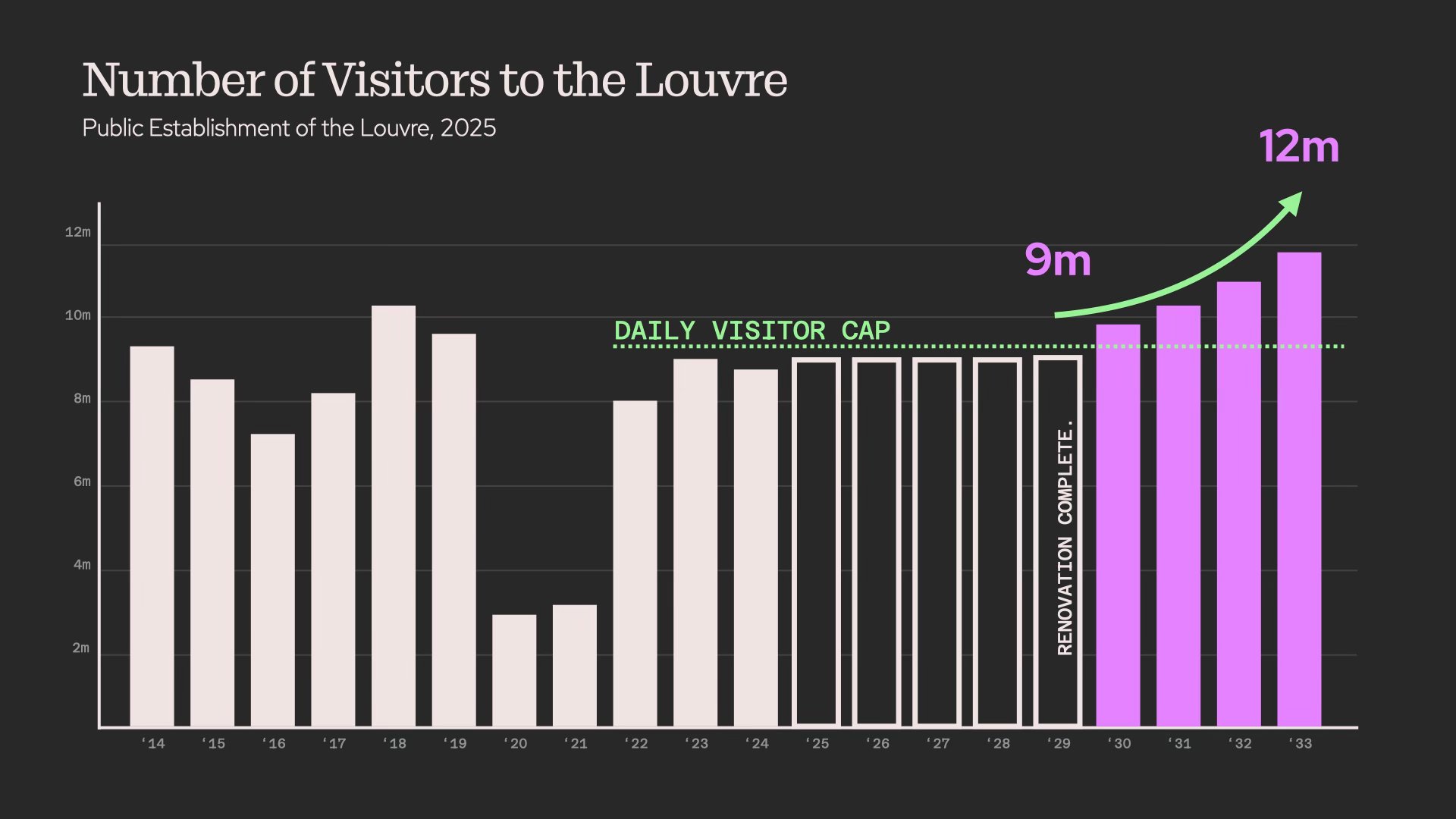
This is what the Louvre’s Management are banking on, literally. The proposed renovations are set to cost between €700m and €800m (~US$ 800m) and, according to Macron, the majority of the costs will be covered by ‘the museum’s own resources, ticket sales, patronage and the museum’s €400 million licensing agreement with the Louvre Abu Dhabi’.
The renovation isn’t so much an expense, as an investment. One that will increase revenues, improve visitor experience and the reputation and standing of the Louvre.
Is ‘La Nouvelle Renaissance’ Ambitious Enough?
I might be alone in thinking this, particularly amidst growing economic concerns around a recession and high costs of living, but I’m slightly concerned that the proposal isn’t ambitious enough. I have two reasons for this:
Over the next 25 years, the travel and tourism industry will double what it achieved in the last cenutry. The number of passenger arrivals will increase from 5 billion to 10 billion by 2050 and the total number of tourists could increase from 400 million to over 1 billion.
By making the experience less stressful, more streamlined, and more enjoyable, demand to visit the museum surges. This is what’s known as the Jevon’s Paradox: improvements to efficiency in resource use leads to higher overall consumption. If the state of queues and crowds at the Louvre has been acting as a deterrent over the last 10 years, then fixing it will result in a ‘rebounding effect’, whereby latent demand drives visitor numbers up quickly. There’s a fantastic explanation of this on Australia’s brilliant comedy, Utopia:
Visitor forecasting, data modeling and - in particular - a deep understanding of any latent demand in behavioral preferences around the Louvre is critical to the success of this renovation. It cannot afford to imperfectly anticipate visitor attendance in 2025.
Final Thoughts.
There’s a lot to like in the proposed renovation at the Louvre: compartmentalizing the Mona Lisa in its own dedicated space to manage bucket-listers, easing visitor flow in and out of the gallery, and improving the visitor experience are all great ideas.
The last major renovation at the Louvre - the one that gave us the iconic glass pyramid - was a celebration of the museum itself. This proposal feels different: it’s practical. Driven not by beauty, but by necessity. For the first time, the museum is acknowledging that to maintain its position as one of the truly great art galleries in the world, it has to confront the reality that there is such a thing as ‘too many tourists’.
As practical as this proposal is, there are challenges ahead. The extraordinary growth in tourism anticipated in the years ahead are going to test the limits of what’s possible through renovation alone. It’s going to test every visitor model and visitor flow they have, and require extraordinary planning.
There are a lot of eyes on the Louvre right now. It has to get it right.
Want to find out just how bad overtourism is going to get in the years to come? Then subscribe below, it’s the topic of our next article. You can also check out our video on how the Mona Lisa became the most disappointing attraction in the world on TheTravelGraph’s YouTube channel here.